Agoraphobia


Adrift upon the Sea of Night

And lost in shades of black and white,

I saw a friendly, dancing light

Upon a distant shore,

And as I left my bleak repose

And sought the dark expanse to close,

Beyond the light, a voice arose,

Then two, then three, then four.

I raised my sails, set my sights

And hastened toward this light of lights;

The voices raised to lofty heights

And filled my heart with cheer.

This place I knew so little of

Seemed filled with peace and joy and love,

I laughed and praised the Lord above,

But then, as I drew near,

I found a void between us ran

And though no hardy sailin’ man,

I battled hard the gulf to span,

So deep, so long, so wide.

The sea grew rough, my ship was tossed,

It wasn’t long, I knew I’d lost;

The chasm’s breadth could not be crossed,

I hung my head and cried.

And then, within a single stroke

I left the Sea of Night and woke;

It all had been a dream — a joke!

I bolted for the door,

And walking ’round the neighborhood

I talked to everyone I could

And for a moment it felt good

To step upon that shore.

Fool’s Gold

gold

Out of a dark and old hidden cave

Near the ghost-town they call Devil’s Eye,

Arose the foul stench of a reopened grave

On a hot, moon-lit night in July.


The Indians told that the cave was the tomb

Of the crazy, young maiden Runs Wild

Who was banned to the cave, for the babe in her womb

Was the Devil’s Eye sheriff’s white child.


Now the sheriff, they say, found her dead in the cave

And he pinned a gold brooch to her breast,

And he fought back the tears as he dug her a grave

Where he lovingly laid her to rest.


The earth fell around her, trapping her tight

In the cave she continues to stay,

And sometimes at night when the wind is just right

You can still hear her wailing today.


Well, one day a drifter named Big Red Calhoun,

Riding through on the Lost Canyon Trail,

Stopped in for a brew in the local saloon

When he heard of the old Indian tale.


He rode to the cave with a lantern that night

And he dug up the corpse and the pin,

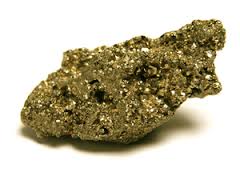
But there in the light, it was only pyrite!

He’d been played for a fool — taken in!


Her soul now released, the young maiden fled

And he let out a thunderous roar

That shook the cave walls and stone ceiling o’erhead

Til they buckled and crashed to the floor.


The stones fell around him, trapping him tight

In the cave he continues to stay

And sometimes at night when the wind is just right

You can still hear him wailing today.

The Mesabi Trail

imag0354

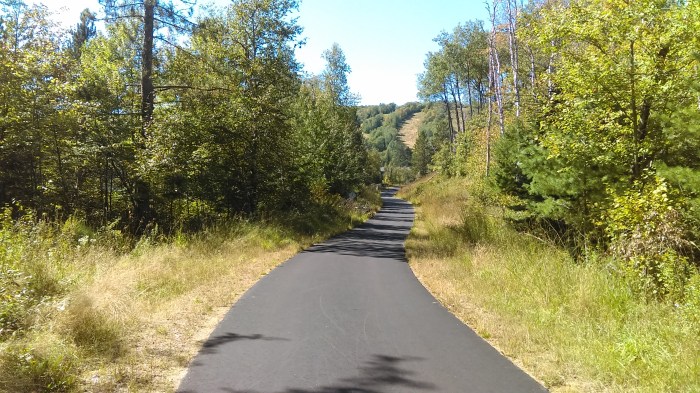
Winding through the heart of the Mesabi Iron Range in Northeast Minnesota, the Mesabi Trail provides close encounters with nature for joggers, cyclists, and walkers like me. When completed, the trail will have 145 miles of paved paths from Grand Rapids to Ely, with several spurs through the picturesque woodlands and around the old, historic iron-ore pits.

imag0111

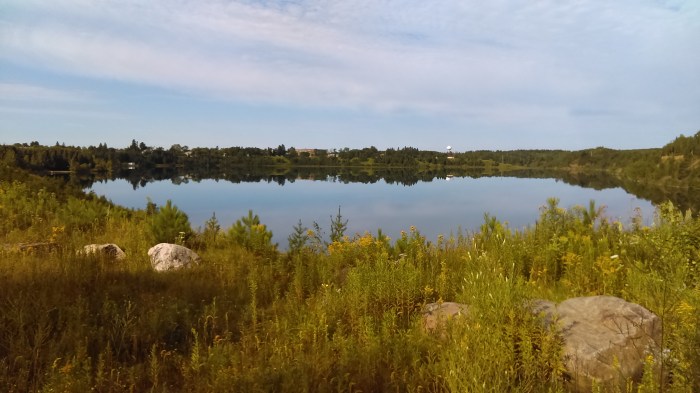
A three-mile loop encircles the St. James pit just north of our little mining town, Aurora.

A casual stroll around the pit is the perfect way to spend a beautiful summer afternoon, and I thought I’d share a few pics I’ve taken on my walks.

imag0212

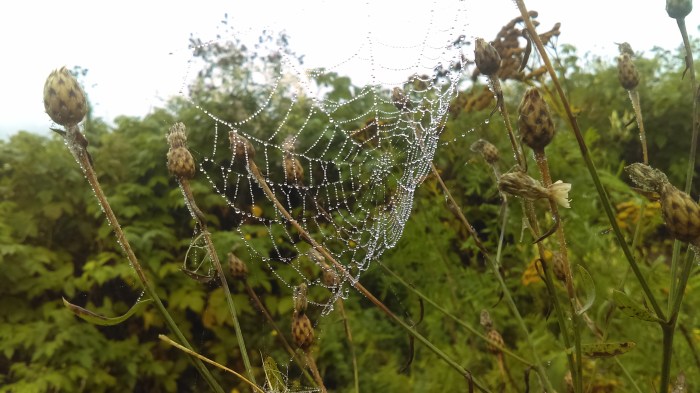
A spiderweb along the path is heavy with dew in the fresh morning air.

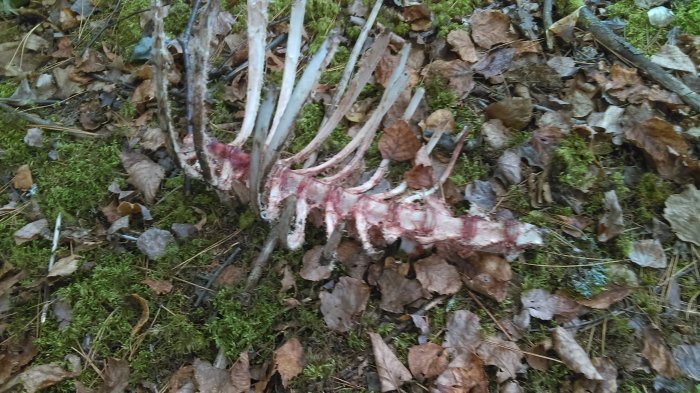
A walk into the woods of Northern Minnesota can be breath-taking, but sometimes we’re reminded that nature can be brutal as well. With no hunting on the ubiquitous mining property, deer populations soar, and the wolves are well-fed.

imag0507

I found this about 50 yards from my door.

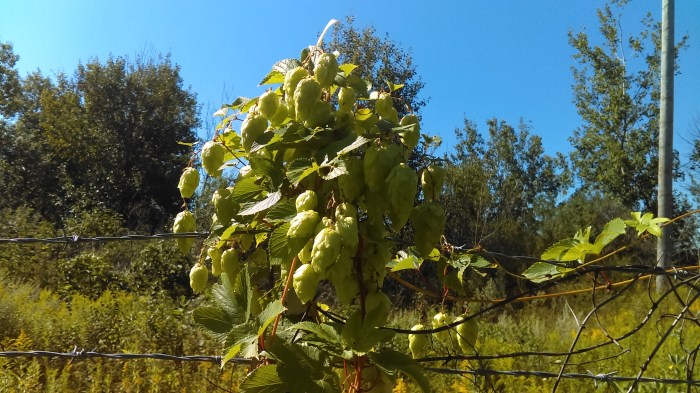
There are a great variety of trees, plants, shrubs, and flowers all along the path.

imag0168

These are wild hops growing on a barb-wire fence on the back side of the pit.

For a longer walk, a path splits off up ahead through the forest where it reconnects with a different part of the Mesabi Trail. It winds around massive mine dumps and skirts the Giant’s Ridge Ski Resort area.

imag0116

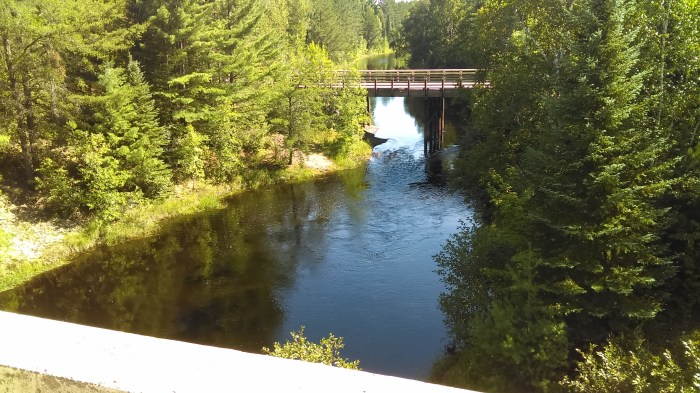
The trail crosses the Embarrass River on an old wooden bridge.

It truly is “God’s Country” up on the Ridge, as one may encounter bald eagles soaring over the hills, moose, deer, or even a black bear.

imag0356

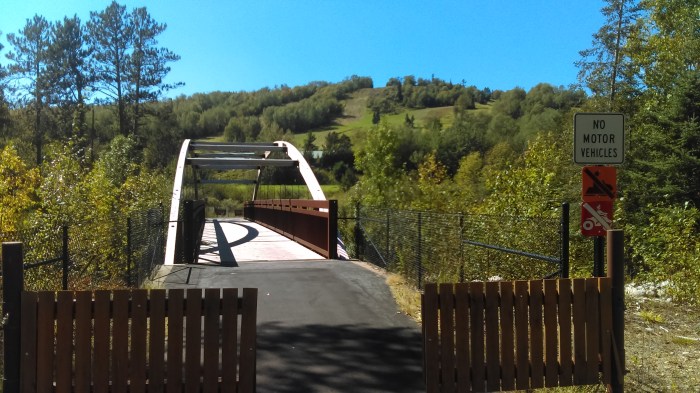
The bridge crossing “The Narrows” between Sabin and Wynne Lakes.

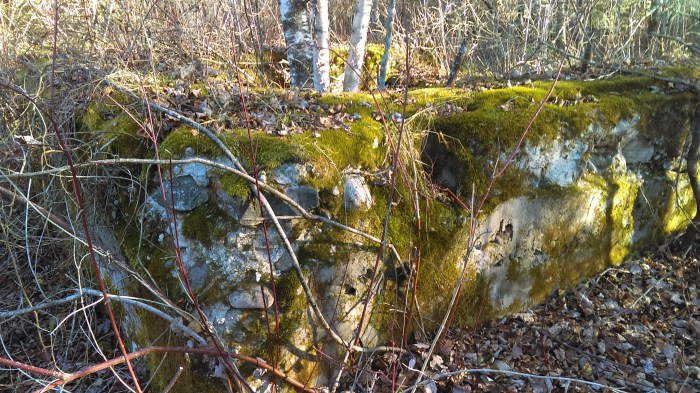
Circling back to the St.James pit, one may stumble upon old cement foundations left behind when the mining companies pulled out.

imag0593

Old concrete structures are hidden in the undergrowth around the pit.

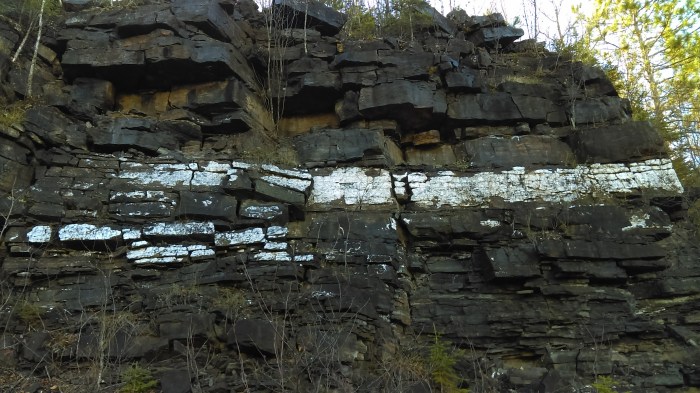
The pits are great places to hunt for rocks; I’ve found quartz crystals, amethyst, and iron pyrite, to name a few.

imag0549

The iron-ore may be gone, but rock hounds would love this place.

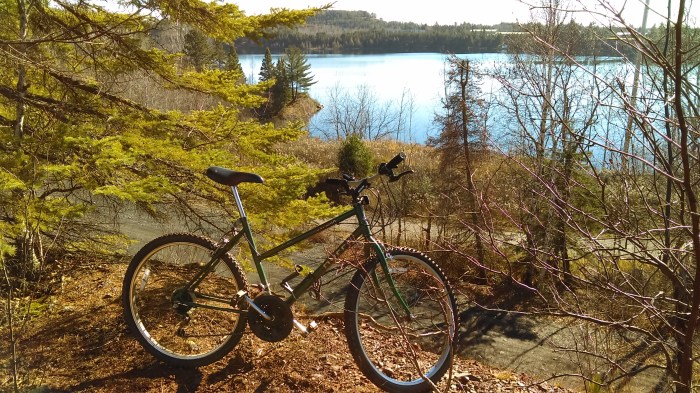
The trail is perfect for bicycling too, as motor-vehicles are not allowed.

imag0566

My trusty ol’ Huffy on a dump overlooking the pit.

When winter comes, the pits are the last to freeze, and all the steam coming off the water makes for nature’s frosty latticework.

imag0683

I took this photo mere hours before the whole pit froze over.

Cellarman

cellarman

Every father dreams of being his little girl’s hero, but usually, by the time she’s 8 or 9, that exalted status has fallen along the wayside. Still, there are times when it comes around again for a little while. So it was on my daughter Chrissy’s tenth birthday, when I caught a glimpse of that long-forgotten look in her eyes — a look that only a father and his daughter can share. I’ll never forget that day. The day that The Cellarman became a super-hero.

I started work around 1:00 AM that day because I knew we’d be brewing, and as sole cellarman of the mid-sized brewery, it was my responsibility to make sure that a fermentation tank in the bottom of the cellar was cleaned and primed with yeast by no later than 4:30 for the new brew. But, as often was the case, we were a bit backed up, and so to make room I first had to carbonate a tank of beer on the top floor, pump it over to the bottle house cooler, and scrub out the empty tank with caustic soda. The carbonating tanks were the hardest to clean, because they each had 6 long, porous stones in the bottom that the CO2 bubbled through.

Next, I had to pump up a tankful from storage on the middle floor and clean that tank. Working backward like that, I was finally able to empty a fermentation tank and free up the precious, yeasty sludge left behind. It’s important for a brewery this size to be able to keep from purchasing yeast and CO2 from outside sources.

By 4:20, I was reaching into the manway door of the fermentation tank with my long-handled, stainless steel dipper, scooping out a pailful of the brown goo, and quickly dumping it into the clean tank. The smell of it made me gag for a second, because, being around beer all morning and drinking a more-than-adequate amount of it at night, I was thoroughly saturated with beer, inside and out. I hooked up the hose, cracked the air-valve, and headed up to talk to the brewmaster. At 4:28 AM, I was still actually ahead of schedule.

I bounded up the cellar’s three flights of stairs, across the driveway, and up the expanded-metal steps in the brewhouse to a cat-walk on the top floor. My legs had become quite powerful by running up and down the stairs every day, and I got there with a whole minute to spare. “You can let ‘er go, Tom, the tank’s ready.” He preferred to be called Thomas, so I always made sure to call him Tom. We harassed each other whenever we could, but it was all in fun.

Thomas was a great brewmaster, but not much of a conversationalist. He took his job quite seriously: he had to; the future of the brewery rested squarely on his shoulders. He pulled on his gloves and cautiously cracked open a big brass valve. The hot, sweet wort began to gurgle its way from the copper kettle down through the pipes on its course to the cooling system and finally to the fermentation tank deep in the bowels of the cold cellar.

It would be well over an hour now until I had anything to do, so as usual I plopped down alongside Thomas on the strategically-placed planks over the mash tun, where the brewmaster kept an eye on things. Sometimes we’d take turns “minding the mint” while the other napped a little.

“Tom, did you see the cracks in the old welds on your railing up there?” I asked, trying to stay awake.

My railing?”

“Up on the cat-walk, above the kettle.”

He turned and looked at me as if I was crazy. “This building is over a hundred years old. Everything needs fixing.” With that he shut his eyes and we waited.

All was warm and quiet in the brewery at this early hour, save the sleepy chug of the compressor for the CO2 collector, and it was always the hardest part of the shift to stay awake. Whenever we brewed, the entire brewhouse was awash with a pleasant aroma not unlike grandma’s home-baked oatmeal cookies, and it somehow made me even sleepier. “Tom,” I said after a while, not sure if he was awake or not.

“Mmmm.”

“You know what Chrissy said at the supper table last night?”

“Your daughter….she’s turning ten today, right? See, I do listen.”

“Yea, she said now that summer vacation’s started, she’s going to miss Mr. Heitz, her friend Marcy’s dad. You know, the counselor at school…the “hero” who saved that Johnson boy from jumping off the school roof. She says all the students like him, cuz he is so cool, and Marcy is so lucky to have him for a dad.”

“Yes, it was a Johnson, wasn’t it? That tall Johnson boy. I wonder if he ever got straightened out.”  He sat back and stroked his neatly trimmed beard. “So she makes you feel like shit, does she?”

“That’s nothing. Last year she told her class that I was a brewmaster. She said cellarman sounded too creepy. And with Marcy bragging up her father’s heroic deed as student counselor, there was no way she was going to tell them that I was a lowly cellarman.

“What do you expect? You are a cellar rat, alright. Not a fine, upstanding brewmaster like yours truly.”  We both laughed, but the truth was, I really couldn’t blame her.

A cellarman comes home from work every day smelling like a brewery, pun aside. The job is hard, tedious, and doesn’t pay well. There’s no pension plan. And now the very title of the job was a source of embarrassment to Chrissy. It wasn’t that long ago that I was her hero.

I went back down into the cellar. It was now about 6:30, and I was hoping to get everything cleaned up before the bottling crew arrived at 7:00 and skip out early to spend the day with Chrissy. But it was not to be.

One of the guys from the bottling crew, the candler, had the flu, so Jerry, bottle filler and straw boss of the bottling house, arrived early to make sure I could fill in. So I took the candler’s position in front of the bright candling light, and pulled “shorts” off the line until noon. We always kept a case or two of shorts in the cooler; unpasteurized bottle beer is the best of two worlds, something most people never get to try. Every brewery worker everywhere knows that there are two things that ruin a beer: Heat and air. And there is nothing quite like an ice-cold short after working a long shift in the steamy bottle house.

12:30 PM. I was finally told I could leave and stepped into the brewhouse to grab my coat. I glanced up and could see a small tour group through the steps and walkways. They were on the top floor, and Mark, fellow worker and sometimes tour guide, was going on in his monotone voice, “This is where the brewing process begins…”

They were all looking down into the mash tun, and nobody was noticing the young girl leaning on the handrails — except me! I remembered the cracked welds and froze in my tracks. I yelled up at them to get someone’s attention, but nobody heard me. In a panic, I flew up the steps, and, just as I reached the cat-walk, the railing gave way, and the young girl went sailing over the edge.

To everyone’s horror, she bounced off the kettle and over the edge of the partial floor. Only by somehow getting her skirt snagged on a single lag-bolt protruding from the ancient wood did she keep from falling three stories to the cement floor below.

She wriggled furiously and her skirt ripped more and more.

“Marcy, stay still!” a man yelled out, and then, “A ladder! We need a ladder! Oh, my baby girl!”

Everyone went pouring down the steps to locate a ladder, but I could see there wasn’t time. I jumped down onto the kettle and made my way to the edge of the flooring. By hooking my strong legs around a support beam, I reached down just as the skirt let go.

Time stood still. For what seemed like an eternity, the girl, Marcy, was in free-fall. It seemed like I had all the time in the world to ponder the irony of this situation. The girl was obviously Chrissy’s friend Marcy, and the man frantically searching for a ladder below was her dad, Mr. Heitz.

A fraction of a second later, my hands closed around hers, and there we hung. Now it was only the strength of my legs that kept her from falling. She looked up at me with terror in her eyes, so with the calmest voice that I could muster under the situation, I said, “Marcy. You’re going to be alright.”

Finally, a ladder was erected and father and daughter were reunited. Someone had managed to call 911 in all the commotion, and when the ambulance arrived, she was still so shook up that they decided to take her to the hospital to get her checked out. As she was being helped into the ambulance, Mr Heitz was all over me, thanking me and pumping my arm like a maniac. And he called me a hero. Mr Heitz called me a hero!

4:45 PM. I finally got my coat and left. I was sure that Chrissy had given up on me as a birthday pal by now.

When I got home, she had given up on me and was over at the neighbor’s house, but when she came home for supper, I was eager to tell her about her friend and all. “Guess who showed up at the brewery today?” I began, “Marcy and her dad.” I was trying to be all cool and nonchalant.

“What?” she practically screamed.

“Yea, they took the tour and…”

“Oh no!” she cried, looking absolutely horrified. “Did she know who you were? Did she talk to you?”

“Well, you could say we hung around a while.” I had to say it, in spite of her reaction; I had practiced the line all the way home.

Before I could say more, she jumped up and stormed off to her bedroom. “I’ll never show my face at school again!” she shouted, slamming the bedroom door. Somehow, her birthday was turning out to be a disaster of epic proportions.

I was sitting there, trying to figure out a way to save the day when a car pulled into the driveway. I went to the front porch and peered out from behind the partly open door. A man and a girl were getting out of the car. It was Marcy and her dad.

I could hear them talking as they came up the walkway. He was saying, “You know, dear, I was once a hero too.”

“Oh daddy, don’t be silly. All you did was talk that boy down. Chrissy’s dad is a real-life hero; he risked his own life to save someone he didn’t even know. Now that’s a hero. No, a super-hero! The Cellarman — it even sounds like a super-hero, doesn’t it, daddy?”

“Yes it does, dear,” he added as the doorbell rang, “and he makes good beer, too.”

Like I said, a father’s hero status with his young daughter is a sporadic thing at best and ever dwindling, and a guy never knows when it will end forever, so I make no excuses and admit that when the opportunity arose that day to bask in that glow one more time, I shamelessly milked it for all it was worth.

Fear of the Future

robot

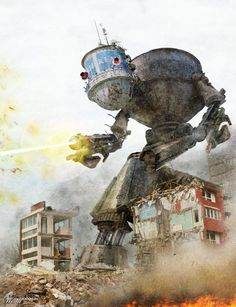
On the futuristic cover of a sci-fi magazine

Was the picture from a story set in 2017:

A giant robot killing everyone that wasn’t good

And the people all were running as he trashed their neighborhood.

Well, I was just a young boy when I stumbled on that scene

Of the crazy science fiction world of 2017;

But now it’s here, yet human beings continue being bad

And the way that things are going I fear the robot’s getting mad.

And So This is Christmas

“And so this is Christmas, and what have we done?”

As I reflect on the changes I’ve made in 2016, I feel that I can truly answer Lennon’s question with, “I’ve bettered myself.”

In March, I was at an all-time lowest low. It had been five years since my wife passed away, and my plan of drinking myself to death wasn’t working, thanks to my mead-swilling ancestors. I swelled up like a woodtick and was nearing 300 pounds. I had pretty much lost everything to booze: my house, friends, family, self-respect, hope. But I still had my three children, and it was my love for them that finally broke the curse, and I believe it when people say that love is the strongest force in the universe, because I know nothing less would have worked. Let me explain.

While I was stuck in non-stop party mode, my oldest child, Aaron, was spiraling out of control himself. With an alcoholic father and a drug addicted mother, the cards were stacked against him from the beginning, but he tried to rise above it, and went to college, got married, and bought a big house. With an anxiety problem, he, too, medicated himself with booze, and soon lost all three. That’s when he moved in with me and we saved each other’s lives —  but not before our drinking almost took his.

I remember waking up and realizing I was laying on a floor. Well, I’d been on more floors than Johnson’s Wax, so it was nothing unusual, until I opened my eyes. I was on the floor at a bar with Aaron lying unconscious next to me. I have a vague recollection of cops and paramedics. I was taken to detox, but Aaron went straight to the ER via ambulance. His blood alcohol level was at the place on the chart where the little guy has exes instead of dots for eyes. But he didn’t die, thanks to his mead-swilling ancestors. And still, we didn’t quit. We tried over and over, but severe alcohol withdrawal is so horrible. It’s like having your anxiety volume control knob tweaked wide open while you feel like you do just before you barf from the flu, and every tortured minute feels like an hour. This can go on for four or five days before you start to feel any relief at all, and the whole time you know you could end the suffering for two dollars.

Only slowly did it dawn on me that to continue drinking with my son was as sure to kill him as a bullet to the head. I had to quit. There was no option B.

So we went through withdrawal together and have been sober since. I’m on a health kick now, and I walk a lot. One week I logged 53 miles. I’ve hiked to every lake, river, and mine pit in the area, and in the Land of 10,000 lakes, that’s a grand tour. It was a wonderful summer, and to date I’ve lost almost 60 pounds. I imagine myself with a ten pound bag of potatoes strapped to each arm and leg along with one on my belly and one on my back. Whew! How did I even move?

My son is doing well too. He has a good job now, and he runs over 5 miles to work, hardly breaking a sweat.

I started my blog in April, writing short shorts and poems and such, but I’m just getting warmed up. I hope to become a real writer someday, and I’m glad that WordPress gives me the opportunity to practice…and better myself. Merry Christmas. And a happy New Year, let’s hope it’s a good one, without any beer.

A Woman’s Place

omega-ii-hard-hat-w-6-pt-ratchet-suspension

I started working in the iron ore mines of Northeast Minnesota back in the early seventies, at about the same time wives and mothers and sisters were trading in their aprons for hard-hats and safety glasses, and showing up in all walks of the male-dominated mining industry. They were soon to become a familiar sight in the pit, but it didn’t happen overnight and there were a few bumps along the way.

You see, mining had traditionally been “men’s work” for generations, and many of the old-timers thought it should remain so. After all, mining was hard, dirty, and notoriously dangerous. OSHA had only recently been founded, and changes for the sake of safety were slow in coming. In fact, a certain number of mining fatalities was not only tolerated, but expected, and there were duly compensated widows all across the range. Hell, in the annals of mining lore, a death in the family in the service of the company might be looked at as down-right respectable. And we miners aimed to be respectable.

Sometimes the stories about these “bumps in the road” were sad, and sometimes they were amusing. This is one of the latter, and it all started that beautiful Minnesota summer morning when a gal named Barb Thorson showed up as the new Car Rider.

Now, I know Car Rider sounds all glamorous, and one might assume it had something to do with a pleasant Sunday afternoon drive in the country, but it was, in fact, one of the dirtiest jobs in mining. Especially in red ore mines. When you worked in a natural iron ore mine, everything you came in contact with soon took on a rusty hue, from your car seats to your beard. And what did car riders make, putting their lives on the line daily? The lowest base earnings paid by the mines. So it was.

It took three car riders and a car loader to handle the job of loading railroad cars: two top riders to bring down empties in groups of five, and pitch hay in the cars that were to be loaded with fine ore, as it had the consistency (and color) of spaghetti sauce, and a “leaker” could temporarily shut down the whole process. So my partner Breeze (the other top rider) and I tried to keep ahead of the game.  We had to work hard sometimes, hauling air hoses all over and pitching hay, but we never actually rode any cars, and if we were very careful, we could usually keep the soupy ore from spilling over the tops of our tall rubber boots.

The bottom rider was not so fortunate, and only he (or she) alone could claim the title of Most Dangerous Job. The bottom rider’s job was to actually mount the five loaded cars under the pocket, and ride them down the steep grade until they smashed into and knuckled up with the string of loaded cars at the bottom. On the trip down, the rider was supposed to tighten the ancient, rusted hand-brake on the top of a car to lessen the impact, but everyone knew the old brakes were useless, and often the rider had to just dismount and let ’em go. The greenhorn always got bottom rider.

Like I said, we miners aimed to be a respectable lot, so we always gave the newbies important advice: first of all, try to find a position in the string that has two brakes together, as they may or may not work. If they both fail, jump down, gallop alongside the 400 ton free-wheeling metal monster until you can climb up on another car. Also, jump off right before they impact, because if you don’t, a torrent of spaghetti sauce will crash into your face and drench you right down to your spaghetti core. Only we didn’t tell them about that last part the first time they went down; we considered it an initiation. I did say we aimed to be respectable.

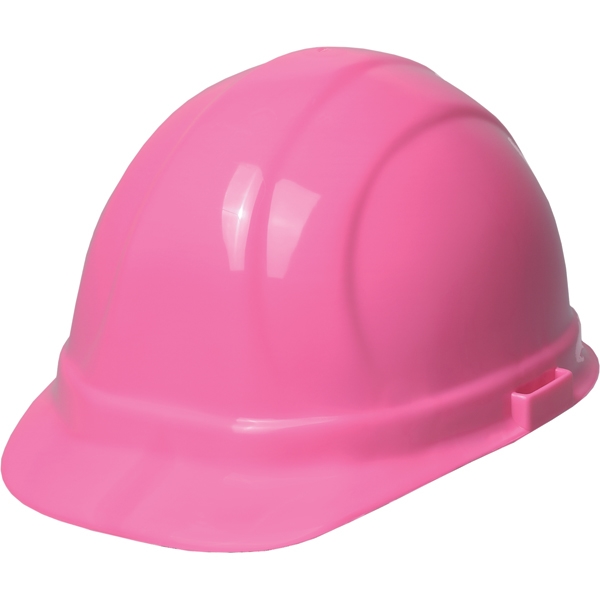
So when the young, fragile waif of a gal Barb Thorson reported as bottom car rider that day, I was afraid that the ore bath might be a little too much. Macho guys were our usual target. I went up to the pocket to have a word with our nasty but efficient car loader, Ol’ Kotsy. As I entered, he was just putting on his pink bunny slippers for the shift. Yes, pink bunny slippers. You see, Kotsy was a pink bunny slipper-wearing asshole. He had put in his time playing in the mud, and now that he had a “dry” job up in the loading pocket, he really enjoyed rubbing it in our faces by wearing his wife’s old slippers instead of the steel-toed rubber boots issued by the company. Someone got their revenge one day by spray-painting Kotsy’s helmet pink to match the slippers, but Ol’ Kotsy couldn’t have cared less. He liked it pink just because it was against the rules. He never wore his safety glasses either, something he’d never get away with in any other part of mining.

“Hey Kots,” I said, trying to appeal to his better nature, “that new girl sure looks too small for her helmet. Maybe you should load this first one light, give her a break, y’know, so you don’t drown her.” I had forgotten that Kotsy had no better nature.

“She should be at home making sandwiches if she can’t handle the job! Damn women, taking our jobs!” Did I mention that he was also the ideal caricature of the male chauvinist pig so prevalent in the era?  Even Breeze was getting pissed at such talk, and Breeze was a hard guy to piss off.

I watched him as he started loading the first string of cars. The first car was filled to the usual limit; yet he held the chute open as I looked on helplessly. All I saw was an idiot with serious issues, and I secretly wondered if there was an uncle or neighbor somewhere to blame.

In his eagerness, he loaded the car so full, the ore flooded over and onto the tracks. “Shit! We’re stuck, Zoner. Get down there and show the princess how to use the tugger.” I had to come up with something quick before disaster struck, and it looked like this was my opportunity. We hooked up the tugger, and got the cars rolling again. Ol’ Kotsy resumed loading like a fiend. He was going to personally see to it that women knew their place, and that place was not in the mines.

Suddenly, someone yelled, “White hats!” to which Kotsy added, “Oh shit.” White hats usually meant the company’s stockholders were coming through, sniffing around just because they could. Breeze started ditching his weed, and Kotsy leaned back into the shadows, but it turned out that day the visitors were a couple of reporters from the local newspaper. They were looking for a photo-op; they wanted a picture of a woman doing the dirtiest, most dangerous job we had for an article in their “Women in Mining” column.

As the woman reporter and her cameraman slid around awkwardly in the mud, so out of place with hard-hats, plastic safety glasses, and tall rubber boots, Kotsy smiled to himself. Like a wolf circling its prey, he began loading with a renewed vigor.

The reporter called up to him, “Is this a good place for a picture of Barb working?”

He purposely waited a minute or two before answering. “Well, you’d probably get the best picture down at the bottom when she hooks her cars onto the string.” I told you he was an asshole. Then he stuck his pink helmeted head out the window, and added, “And while you’re down there, why don’t you tell her to go home where she belongs! Women! The only place in the mine a woman should be is in the kitchen making over-time lunches for us men! You can put that in your fool paper!”

The reporter’s eyes glared at him through over-sized safety lenses; she’d met his kind before. She talked to the cameraman, and they gathered their equipment and headed down the tracks.

Finally, the last car was (over)loaded, and Barb went to work, first bleeding off the air from the cars, and then, when they began to roll, climbing up on one to the hand-brake on top. The reporter could see her now, head and shoulders above the cars, and she signaled her cameraman to get ready.

Sure enough, that brake wouldn’t budge, and she had to jump to another car. She reefed frantically on that brake too, but it proved useless as well, and soon the merry train was hurtling at break-neck speed toward the others, and Barb had all she could do to hold on. They slammed into the loaded string so hard, that a huge red wave of iron ore erupted violently from each car, completely washing over everything. When it was over, there was no sign of Barb.

I started running toward her yelling, “Barb! Are you alright?” No answer.

Suddenly Ol’ Kotsy started panicking, thinking he might have killed her. He came flying down the steps, and started sprinting toward us right through the knee-deep red mud in his pink helmet and bunny slippers. It was a sight to behold. “Barb, are you hurt?” he gasped, choking and coughing.

What he found when he made his way around the car, was Barb and I having a good laugh at his expense; I had warned her when we used the tugger to duck under the lip of the car at the last second to avoid the deluge, hang on tight, and remain silent. He got so mad, his face turned iron ore red, and he kicked at the mud. This made him lose his footing and down he went, face first in the slop. We couldn’t stop laughing to see him there, covered from head to toe in mud with a pink helmet and, of course, his pink bunny slippers!

Barb was starting to feel kind of bad about it, her first day and all, so she walked over and offered Kotsy a hand getting up. With all the commotion, nobody heard the click of the camera.

Yea, Ol’ Kotsy was sure surprised that day when Barb Thorson came to work. But not nearly as surprised as his wife was when she flipped open the paper the next day, and there, under the “Women in Mining” column, was a picture of her husband being helped to his feet by a female co-worker while wearing a pink helmet and HER pink bunny slippers. The caption read: A Woman’s Place in Mining.

A Letter to Myself

Dear Self,

I wonder if Ol’ Mother Earth

Grows weary of us on her girth,

Depleting resources each day

To insure our short lives are okay.

Or are we so much more than that?

Are we Gods, rearranging our flat?

Can we buy up the deed to this ball;

Own a piece with a fence or a wall?

No, we are Earth.

We’re billions of Earth’s eyes and ears

And noses and tongues, it appears,

For did we not spring from her mud?

Do we not hold her magma as blood?

For the Earth wants to taste and to see,

And to smell and to hear, just like me,

So she fashioned extensions with senses,

And to do that incurred some expenses.

There are no regrets.

There are no excuses she gives,

For at last she can see where she lives,

And there’s music and flowers and food,

And there’s romance when she’s in the mood.

No, humans are not like some pest

That you can’t seem to shake from the nest.

We upgraded the world with our birth,

So have a nice day.

Signed,

The Earth